
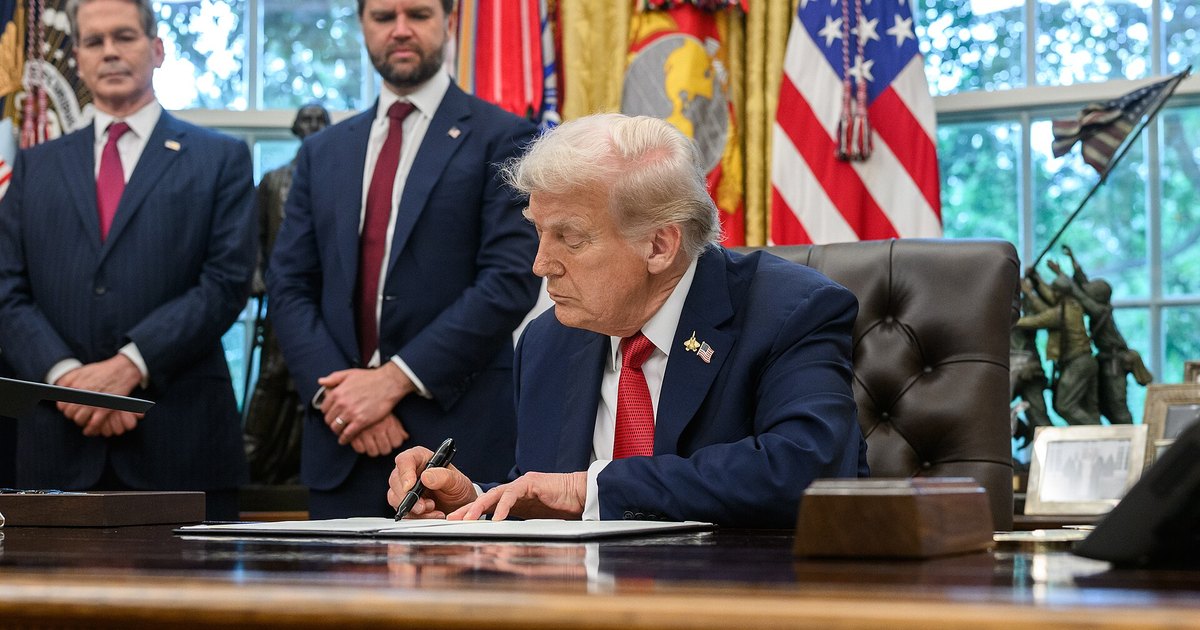
President Trump has a complaint about the three Supreme Court justices he put on the bench in his first term: they do not rule his way often enough. In an interview with Time magazine published Thursday, he was asked about Justices Neil Gorsuch, Brett Kavanaugh and Amy Coney Barrett, and he did not reach for a diplomatic answer.
"What can I do? I put them in. They voted against me too often," Trump said, according to the transcript Time released.
It is a remarkable thing for a Republican president to say out loud. Those three confirmations were, for many conservative voters, the single best argument for his first term. Now the man who made them is telling the country they let him down, about a month before the midterm elections.
What he said, and what he was asked
Time's transcript dates the interview to Monday, Sept. 28, at the White House, with correspondent Eric Cortellessa and editor-in-chief Sam Jacobs asking the questions. Reuters and several other outlets summed up the exchange as Trump regretting the nominations, though the word does not appear in his answer. The president went on, according to the transcript: "I gave them the position of a lifetime, and they vote against me often."
He contrasted his nominees with the court's three Democratic appointees, who he said hold together on nearly every case, and he allowed that there is something he admires in that kind of loyalty. Time's interviewers then pressed him on whether loyalty is what he wants from a justice. His answer: "No, I don't want loyalty. I want good decisions."
The remarks did not come out of nowhere. After a recent ruling on mail-in ballots, Trump wrote on Truth Social that the three were "merely a shell of their original selves" and not the people he had interviewed for the job, NTD reported.
The three rulings behind the complaint
Breitbart News laid out the losses that have built up this year. In February the court threw out the president's global tariffs, which he had imposed under an emergency-powers law. That decision was 6-3, with Gorsuch and Barrett in the majority. In June the court struck down his executive order on birthright citizenship; Barrett and Kavanaugh sided with the majority there, and Gorsuch dissented. In September came the mail-in ballot decision, in which the court declined to let a Postal Service restriction take effect before the November election.
The tariff case is the one that plainly stings most. Trump told Time the justices could have added a short clause saying money already collected did not have to be returned, which by his figure would have saved $400 billion. That number is the president's own claim, and the coverage reviewed for this story did not independently confirm it.
The other side of the ledger
The full record is more mixed than the interview suggests. The Western Journal noted that the same court has handed the administration significant wins, including decisions that widened presidential power and cleared the way for deportations. Nor did the three move as a bloc. Gorsuch sided with the president on birthright citizenship, and Kavanaugh was not one of the two Trump appointees in the tariff majority.
As background, this is how the system was built. Federal judges serve for life so that they owe nothing to the president who chose them, and conservatives have spent decades arguing that a judge's job is to read the law as written, not to deliver results for a patron. A justice who rules against the man who appointed him is not automatically wrong, and not automatically right either. The argument worth having is whether the tariff and citizenship opinions got the law right, and that is a debate about the text, not about gratitude.
Trump's frustration is still easy to understand. He campaigned on those policies, and the votes that sank them came from his own side of the bench.
What happens next
For now, nothing changes at the court. The Supreme Court did not respond to the outlet's inquiry about the president's remarks, and no vacancy has opened during his second term. The three justices hold their seats for as long as they choose. If a seat does open, the president has now told the country what went wrong, in his view, with the last three picks, and senators of both parties will be listening for what he wants from the next one.
Sources
- Time: transcript of President Trump's 2026 interview
- Reuters (via Maryland Daily Record): Trump says he regrets nominating Supreme Court Justices Gorsuch, Barrett and Kavanaugh
- Breitbart News: Trump Says He Regrets All 3 of His Supreme Court Picks
- The Western Journal: Trump Explains Why He Regrets Nominating Supreme Court Picks
- NTD: Trump Says He Regrets Nominating Barrett, Kavanaugh, Gorsuch to Supreme Court


 Done Cleaning Gutters? Compare Gutter Guard Quotes in Your Area
 21 Senior Discounts and Savings Programs Worth Checking in 2026
 Social Security Changes Coming in 2026 That Impact Everyone
 Carrying $24,000 or More in Credit Card Debt? See If You Qualify for Relief
 Retirees On SS Are Due A Large Surprise This Week
 A Beverly Hills Plastic Surgeon Shares His At-Home Routine for Fine Lines
1 Comment
Relieved that the justices are acting out of conscience as opposed to gratitude or some kind of expediency,