
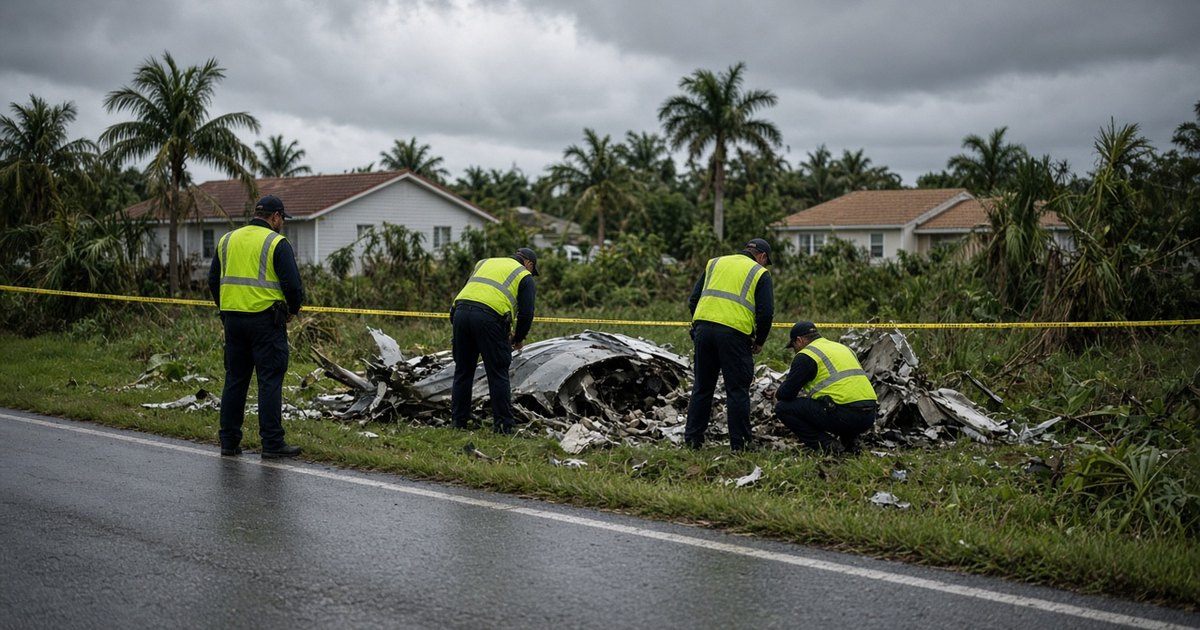
Federal investigators have recovered the cockpit voice recorder from the Learjet 60 that crashed nose-first into a South Florida street on Nov. 1, killing all nine people on board. The National Transportation Safety Board announced the find Monday in a post on X, saying the recorder was found at the site of the crash and is being evaluated at the agency's Vehicle Recorders Laboratory in Washington, D.C.
The NTSB wrote that "The [cockpit voice recorder] is being evaluated in the NTSB Vehicle Recorders Laboratory in Washington, D.C." What the recorder captured, and whether it survived the impact in working order, has not been disclosed.
The NTSB also said excavation at the impact site is now complete, according to the Daily Wire. The crash happened near Greenacres in Palm Beach County.
A Bahamas Flight That Never Arrived
The business jet had departed Austin-Bergstrom International Airport in Texas bound for the Bahamas, the Daily Wire reported. The Associated Press, in a story carried by NTD, identified the operator as Upper Jets; that detail has appeared only in AP's reporting so far.
Air traffic control audio described by the Daily Wire indicates the two pilots were contending with turbulence and light, clear ice. The outlet reported that the co-pilot asked for a better route and to climb, and that she issued a mayday reporting a descent rate of 20,000 feet per minute. That sequence and figure come only from the Daily Wire. The AP reported the co-pilot said the aircraft was thrown up and down more than 700 feet, and that the jet had steered around a large storm cell before entering a smaller one that was developing quickly. The Daily Wire also reported that dash-cam video shows the plane striking the ground nose-first, followed by a fireball and a large crater.
Pieces Away From the Crater
The AP reported that pieces of the plane's elevator were found more than a mile from the crater. The NTSB has not issued a formal finding on whether the jet began breaking apart in the air, and the AP's suggestion that it did is an inference drawn from investigators' comments rather than an official conclusion.
NTSB member Tom Chapman said, as quoted by the Daily Wire, that the inquiry will focus on how the pilots and air traffic control determined the plane would fly into thunderstorms. "The factual details of how this transpired is exactly what we're trying to determine," he said.
What Outside Experts Are Saying
No cause has been determined. Weather, icing and turbulence are theories advanced by pilots and outside experts, not findings. DeWitt Ingram, a Learjet-rated captain, told the Daily Wire that rough air at the top of a storm could have done serious harm. "If the pilot flew into the tops of one of the thunderstorms, in that very rough air, he could have damaged the airplane to the point where he lost control," he said.
Jeff Guzzetti, a former NTSB investigator, told the AP: "It's very plausible that any info on the recorder survived." The Daily Wire, citing the Wall Street Journal, reported that Guzzetti also said business jets usually fly over weather.
There is reason for caution. The AP pointed to the January 2025 medical jet crash in Philadelphia, where the recorder had likely not functioned for years. The condition of the Florida device was described as not immediately known.
A Small Agency With a Long Docket
The NTSB has about 400 employees and more than 1,200 active investigations, according to the AP, and its investigations take 12 to 18 months.
Next comes the lab work in Washington to determine whether the recorder works and whether any audio survived. The Daily Wire reported that a preliminary report is due in December; the NTSB's own timing was not available in the reporting. A final determination of cause is likely more than a year away.




 Emergency Food That Stores Up to 25 Years: Ready Hour Kits From 3 Days to 6 Months
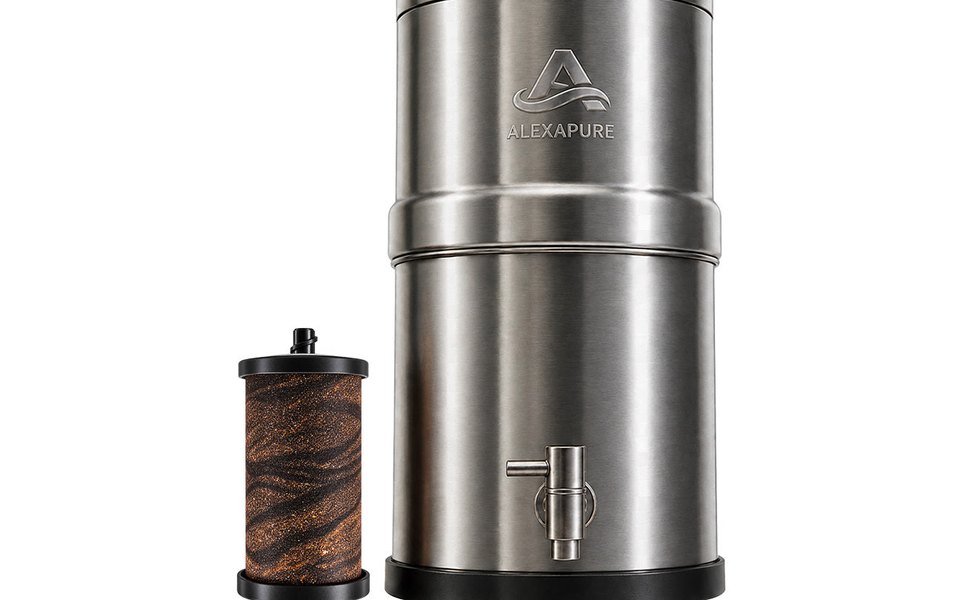 This Countertop Filter Reduces 206 Contaminants Found in Drinking Water
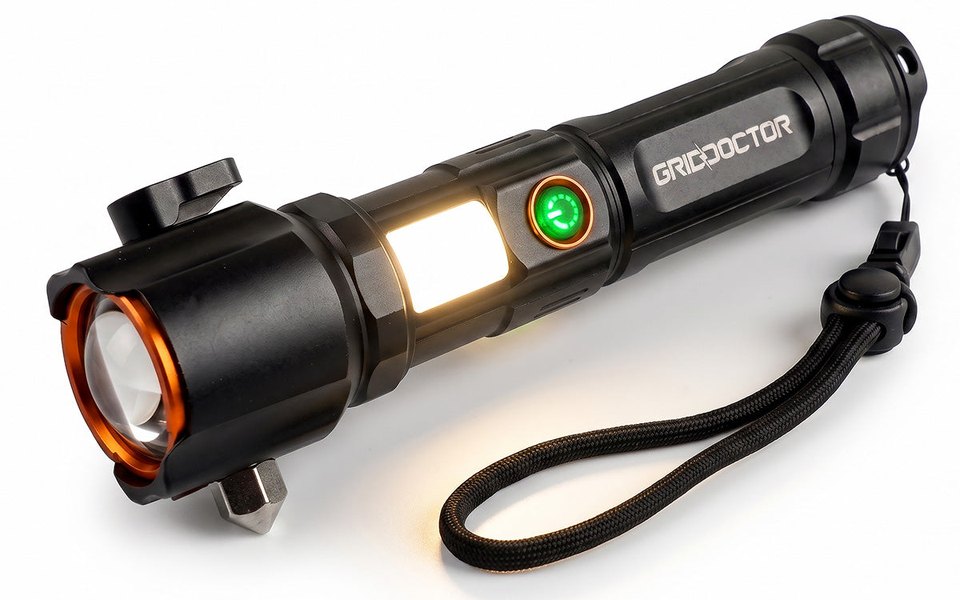 This Tactical Flashlight Also Breaks Car Glass and Cuts Seatbelts
 Try Ready Hour Emergency Food for $34.99 With This 72-Hour Sample Pack
 Ready Hour 4-Week Food Supply: 2,000+ Calories a Day, Stores Up to 25 Years
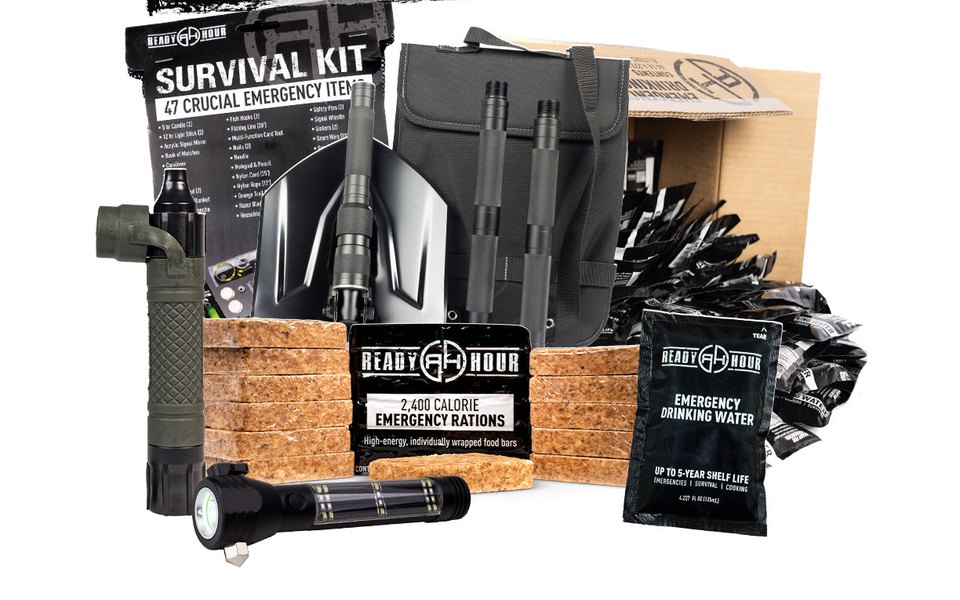 Stuck on the Road This Winter? This Car Kit Packs Food, Water and 47 Emergency Items
0 Comments
Be the first to comment.