
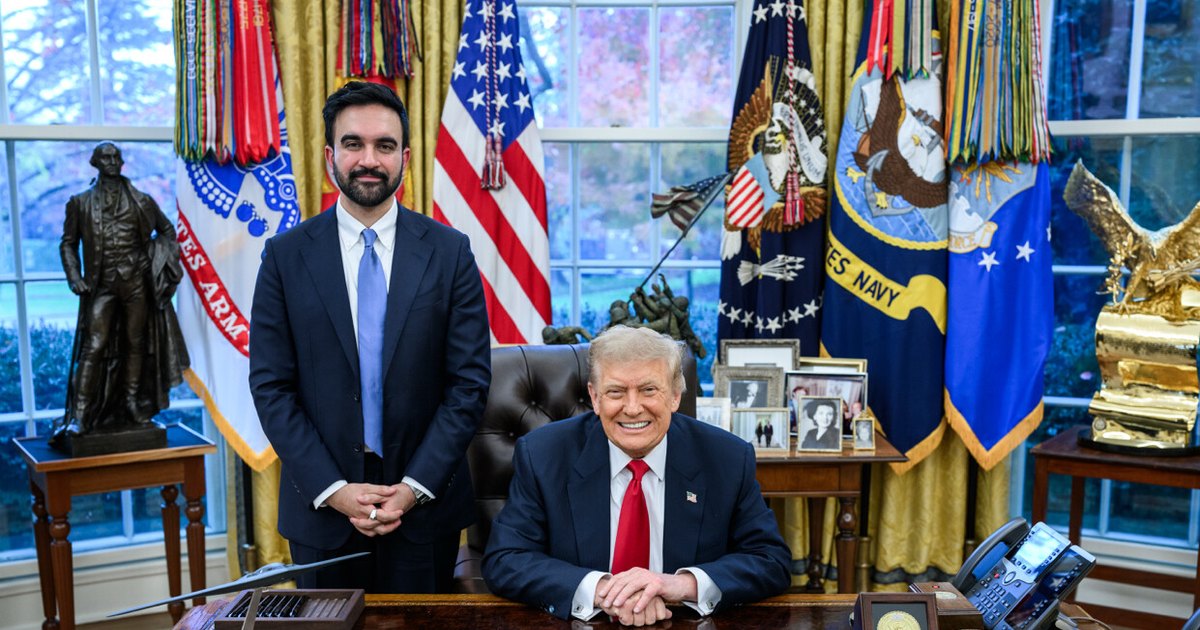
New York City Mayor Zohran Mamdani's administration released a document on Tuesday, Sept. 29, that it bills as the first strategy of its kind produced by an American city: a plan to combat antisemitism, titled "Tackling Hate: The Mamdani Administration's Strategy to Combat Antisemitism." It funds security grants, Holocaust education and hate-crime prevention. It does not adopt a definition of antisemitism.
Within a day, five of the largest mainstream Jewish organizations in the city answered with a joint statement that did not read like a welcome. They said the plan skipped the one thing City Hall could not credibly skip — the connection, in their words, between rhetoric that demonizes and delegitimizes Israel and "the targeting of Jewish New Yorkers."
That is the fight now in front of a mayor who told reporters the day after the release that criticism of a government is a different thing from bigotry against a people.
What Is Actually in the Plan
The document runs somewhere between 30 and 35 pages, depending on which outlet counted it — Jewish Insider described a 30-page plan, the Washington Examiner 33 pages, and The Jewish Chronicle 35. The dollar figures are clearer. Jewish Insider reported $7.4 million in total for security and prevention grants. The Jewish Chronicle broke that out as roughly $6.4 million for hate-crime prevention and victim support and $1 million for house-of-worship security.
CBS New York reported the plan includes $1.25 million for the Museum of Jewish Heritage, a dedicated antisemitism hotline, reimbursements for security cameras at private schools, and community security training. The Forward reported that the Jewish Community Relations Council of New York will serve as the program's anchor organization.
The numbers sit against a grim set of NYPD figures. Anti-Jewish incidents were up 8.5 percent over the first seven months of 2026, according to data cited by the Forward, and 57 percent of reported hate crimes in that period had Jewish victims. The Washington Examiner noted that Jews make up roughly 12 percent of the city's population while antisemitic acts account for more than half of reported hate crimes.
The Definition City Hall Would Not Write Down
The sticking point is what the plan leaves out. The mayor's office told the Washington Examiner that adopting a "singular definition" of antisemitism was not "necessary or useful" — a notable choice, since the plan is modeled in part on the Biden administration's national strategy, which leaned on the IHRA working definition. The Anti-Defamation League had pressed the city to adopt a formal definition and to keep municipal contracts and pension investments, in its phrasing, free of ideological boycotts, according to the Jewish Telegraphic Agency.
The joint statement — signed by UJA-Federation of New York, JCRC-NY, AJC New York, the ADL and the New York Board of Rabbis, as reported by La Voce di New York — put it bluntly. The plan, the groups wrote, "fails to address a central issue that the mayor himself has perpetuated: rhetoric that demonizes and delegitimizes Israel inevitably leads to the targeting of Jewish New Yorkers." They added: "Those who truly seek to address antisemitism must unequivocally reject such rhetoric."
The ADL said separately that Mamdani "does not treat the hate facing Jewish New Yorkers as an emergency." Rabbi Ammiel Hirsch told JNS the plan "is a big evasion, very disappointing." Rabbi Elliot Cosgrove and Assemblyman Dinowitz also criticized it. Moshe Davis, who ran City Hall's Office to Combat Antisemitism under Mayor Eric Adams, praised the security measures while faulting how the plan handles anti-Israel activism, The Jewish Chronicle reported.
Mamdani defended the document at an unrelated press conference the next day. "I think criticism of a prime minister, criticism of government policy is distinct from bigotry of a people," he said, per La Voce di New York. That is the argument. His critics say the plan was the place to draw the line and he declined to draw it.
The Part That Still Needs Confirming
The New York Post has reported that a broader coalition — more than 25 groups — sent a letter this week demanding the administration rewrite the plan. That letter, its signatory list and the Post's anonymously sourced characterizations have not been independently verified here, and readers should treat the scope of that coalition as unconfirmed until the document itself surfaces.
What happens next is straightforward enough to watch for: whether City Hall responds to the letter, whether it amends the strategy, and whether it ever puts a definition of antisemitism on paper. The money is already budgeted. The argument underneath it is not close to settled.





 A Beverly Hills Plastic Surgeon Shares His At-Home Routine for Fine Lines
 Akusoli Insoles: Arch Support and Shock-Absorbing Gel for Tired Feet
 If You Get Social Security, Don't Skip This Month's Benefit Check
 Carrying $24,000 or More in Credit Card Debt? See If You Qualify for Relief
 Put Tin Foil in the Dishwasher? Here's Why Seniors Do It
 Best Gift: Here Are 27+ Of The Coolest Gifts For 2026
0 Comments
Be the first to comment.