
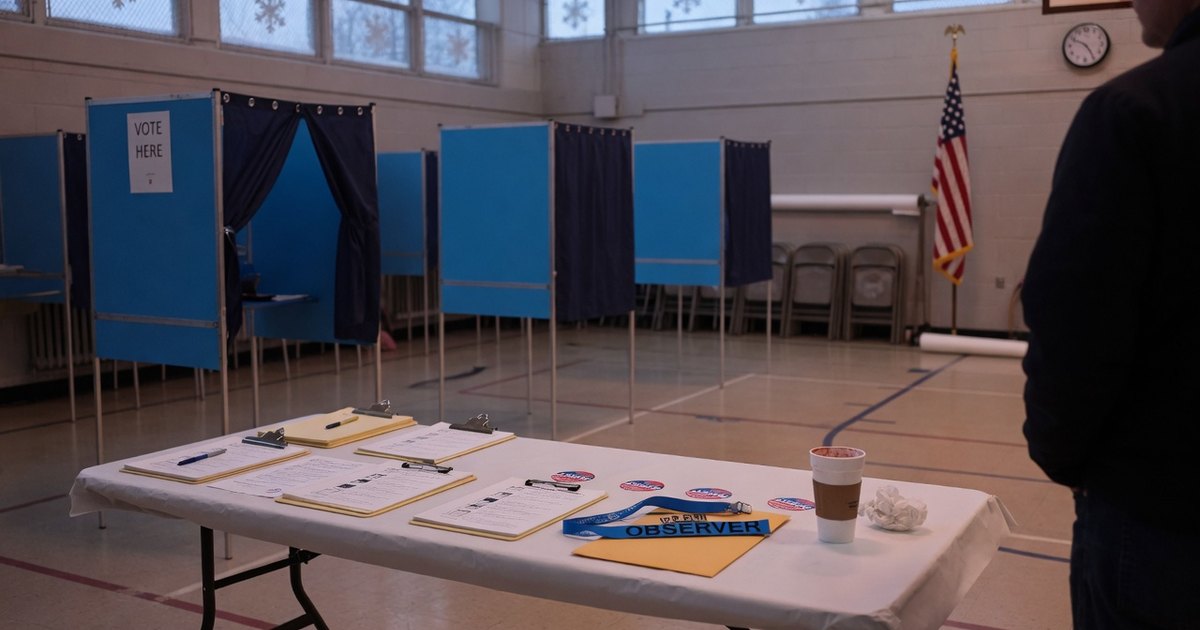
The Justice Department is preparing the largest election monitoring operation in its history for the Nov. 3 midterms, with roughly 1,000 staff fanning out to polling places in all 50 states. Democratic parties and their allies have answered with tens of thousands of volunteers of their own, and some state officials are planning to send observers to shadow the federal observers.
The result is people with clipboards watching people with clipboards, with control of Congress at stake. The Justice Department calls its monitors routine observers; Democrats and some state officials say the presence could intimidate voters.
Department spokesperson Kiersten Pels was the source for the 1,000 figure, the Associated Press reported. Reuters, in a story carried by US News, put the total at about triple the number sent out for the last midterm.
What the Federal Monitors Will Do
A senior department official told the AP the monitors will concentrate on heavily populated areas, places with a history of problems and close districts. During this year's primaries the department sent more than 100 monitors to hundreds of polling locations.
The department says the job is to watch and write things down, not to badge anyone. According to Reuters, a senior department official, attributed to Pels, said monitors "will not identify themselves as prosecutors." President Trump, speaking about monitors headed to Georgia, said, "They're not going to do anything other than watch."
On the most heated question, whether immigration agents will appear at the polls, the administration has been flat. Assistant Attorney General Harmeet Dhillon told CBS's "60 Minutes" there was no such plan, the AP reported. White House spokeswoman Lauren Bis described the critics as fearmongering. Jane Kleeb, a vice chair of the Democratic National Committee, says the president has threatened it.
The Other Side Brings a Bigger Crowd
State Democratic parties have trained an estimated 10,000 volunteers. Common Cause says it has trained about 16,000. The Election Protection coalition, made up of some 300 other groups, claims tens of thousands more. Senate Democrats organized about 100, and Indivisible and MoveOn are activating their networks.
A Democratic-allied group called Save America is training clergy, veterans and teachers, and its volunteers are already watching early voting in Georgia, Michigan, North Carolina and Ohio. Its executive director, Mary Corcoran, framed the federal presence this way: "The fear is the point, and we must do something about it."
The Democrats' state committee association has also stood up a cybersecurity unit staffed by former CIA and FBI officials. The Democratic Mayors Association issued guidance saying federal law keeps immigration agents, the FBI, investigative personnel and armed agents away from polling places.
Republicans are not sitting out. The Republican National Committee has election integrity deputy state directors in 22 states, including Arizona, Michigan, Georgia and North Carolina, and says it has enlisted nearly 22,000 poll workers.
California Squares Off With Washington
The sharpest friction is in California. Attorney General Rob Bonta said at a Monday press conference in Sacramento that the state will again send its own observers, as it did in Los Angeles, Orange, Kern, Riverside and Fresno counties during last November's Proposition 50 special election, ABC10 reported. Separately, Reuters quoted him as saying, "They are the source of interference." The excerpt does not make clear whom he meant.
The backdrop is legal combat. The department has sued California and Alaska in cases that could touch counting or certification, and Reuters reported the administration is trying to stop California from counting about 20,000 mail ballots from voters it alleges are likely noncitizens. Those allegations come from the administration, and the details have not been established in court.
Elsewhere, the temperature varies. Wyoming's Republican governor, Mark Gordon, called the behavior of two monitors in his state's primary "a bit aggressive" and "irregular," and a Laramie County clerk said her office refused to let them interview voters; the department disputes any impropriety. In Lansing, Michigan, city clerk Chris Swope contacted law enforcement and his attorney in advance of Election Day as a precaution; the AP did not report any incident. Minnesota Secretary of State Steve Simon said his office will likely shadow the federal monitors, while acknowledging they had not been disruptive.
What Comes Next
Early voting has been under way since Oct. 19, and Election Day is Nov. 3. After that, the department reviews what its monitors saw, the lawsuits in California and Alaska continue, and the 20,000-ballot fight could shape how fast California finishes its count. Whether all those observers end up recording a routine election or a contested one will not be known until the ballots are in.

 People Born 1939-1969 Are Due A Large Surprise This Week
 Homeowners: Compare Quotes on Energy-Efficient Replacement Windows
 Put Toilet Roll Under Seat
 Social Security Changes Coming in 2026 That Impact Everyone
 Drivers: These ZIP Codes Pay the Most for Car Insurance (Is Yours on the List?)
 Dermatologists: The 1 Vitamin You Need If You Have Wrinkles
0 Comments
Be the first to comment.