
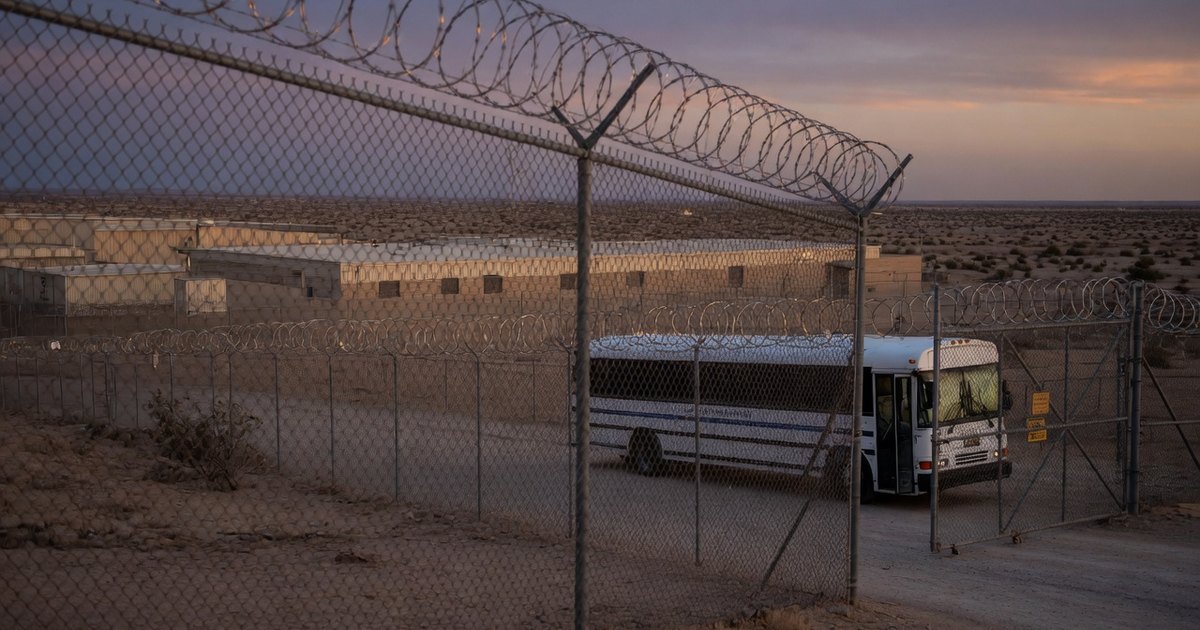
The Supreme Court on Thursday agreed to decide whether the Trump administration can hold illegal immigrants arrested inside the country without a bond hearing while their deportation cases run. The justices granted the government's petition in Rhoney v. Barbosa da Cunha, No. 26-104, four days before the new term opens.
The court's docket shows the administration filed its petition on July 23 and that the ruling under review came from the 2nd U.S. Circuit Court of Appeals on April 28. No argument date has been set.
The stakes are hard to overstate. Detention is the working machinery of the deportation effort: a person in custody shows up for his hearing, and a person released on bond may or may not. Whichever way the court rules, it will settle a question that has been answered differently depending on which part of the country an arrest happens in.
What the policy says
The fight is over a single provision of immigration law, 8 U.S.C. 1225(b)(2)(A). As SCOTUSblog described it, the provision says noncitizens "shall be detained" for removal proceedings if an immigration officer finds they are "not clearly and beyond a doubt entitled to be admitted." A separate section of the law allows release on bond or conditional parole.
For years, the government read the first provision as covering people stopped at the border and the second as covering people picked up in the interior. In July 2025 the administration issued guidance taking the other view: anyone who crossed illegally and was never formally admitted is still, in the eyes of the law, an applicant for admission, no matter how long ago he came. On that reading, detention is mandatory and an immigration judge has no bond to grant.
The question the justices accepted is narrow and statutory. It asks whether the provision "mandates the detention pending removal proceedings of aliens who, like respondent, are present in the United States without having been admitted."
A lopsided split, but a real one
The administration has lost this argument far more often than it has won it. The 5th and 8th Circuits have sided with the government. Nine federal appeals courts have gone the other way, according to a Newsmax report, the 2nd Circuit among them.
The trial courts have been busier still. SCOTUSblog cited a Politico analysis counting more than 9,300 district court rulings against the guidance since it took effect. Newsmax put the number of federal lawsuits seeking release from detention this year at more than 73,000. Neither figure has been independently checked for this story.
That is the government's best argument for review, and it is one both sides can live with. Breitbart News reported that the Justice Department told the court the conflicting rulings had produced an "unworkable patchwork," with a person held in one part of the country and released in another. A federal statute is supposed to mean the same thing in Texas as it does in New York.
The case the court picked
The respondent is a Brazilian national who, according to the coverage, entered the country without inspection about two decades ago, applied for asylum in 2016 and was arrested by immigration officers in September 2025. An immigration judge found his detention mandatory under the new guidance. A federal judge then ordered a bond hearing, and the 2nd Circuit agreed.
It is not the set of facts the administration would have chosen to illustrate the policy, and its critics know it. The American Civil Liberties Union, quoted by Newsmax, says the government's reading "could subject millions of immigrants to mandatory detention."
The government's answer is that the text does not carve out an exception for people who avoided being caught for a long time. Congress wrote "shall be detained," and the argument is that an illegal entry does not ripen into a legal admission with the passage of years. Whether the surrounding sections of the law support that reading, or undercut it, is what the justices will now sort out.
What happens next
SCOTUSblog expects argument early next year, and a Gray Media report said a decision is due by the end of June 2027. Until then the map stays as it is: no bond hearings in the circuits that have backed the administration, bond hearings in most of the rest. A grant of review is not a ruling on the merits.
Sources
- Supreme Court docket: No. 26-104, Rhoney v. Barbosa da Cunha
- SCOTUSblog: Court agrees to hear arguments in important immigration case, religious zoning dispute
- SCOTUSblog case page: Rhoney v. Barbosa da Cunha (26-104)
- Breitbart News: Supreme Court to Review Trump ICE Mandatory Detention Policy
- Newsmax via Yahoo News: Justices Take Up Trump Immigration Case That May Revive 'Catch and Release'
- Gray Media (WSAW): Supreme Court to review immigrant detention policy


 People Born 1939-1969 Are Due A Large Surprise This Week
 Best Christmas Gift: Here Are 27+ Of The Coolest Gifts For 2026
 Stuck With a Timeshare? See Whether You Qualify to Cancel
 Who Has The Cheapest Home Insurance? (Check Your ZIP Code)
 Social Security Changes Coming in 2026 That Impact Everyone
 Tired of Adding More Pills? Some Seniors Are Trying a Daily Berberine Patch
0 Comments
Be the first to comment.