
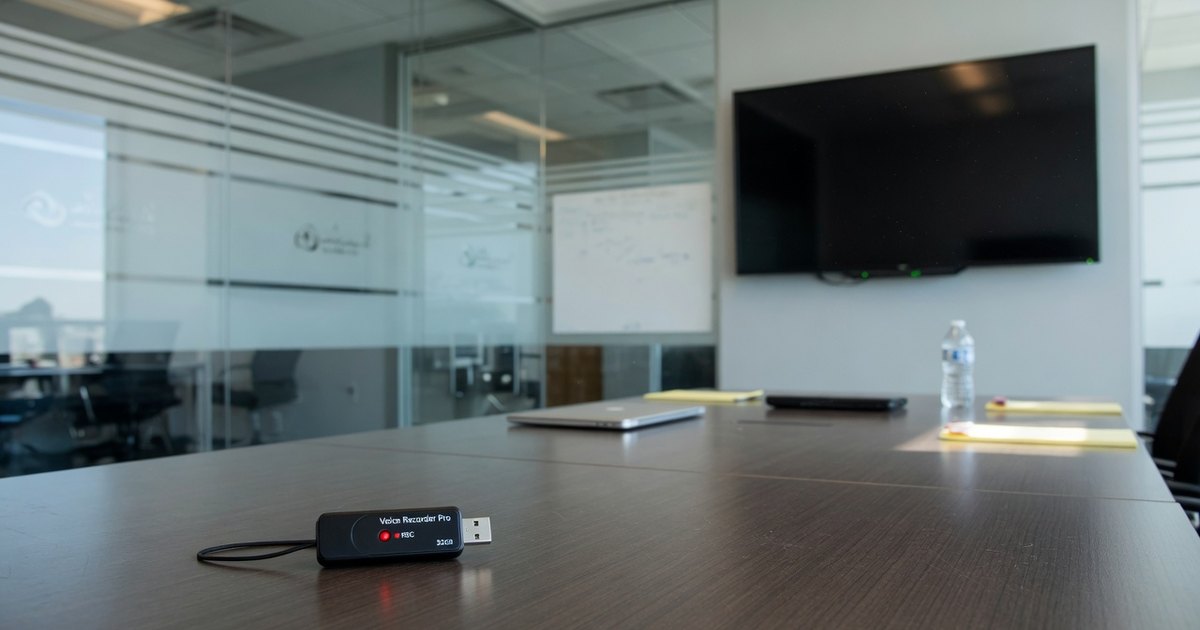
An engineer at OpenAI has been charged in federal court with planting a hidden audio recorder inside an executive conference room at the company's San Francisco offices, according to a criminal complaint unsealed this week by the Justice Department.
Prosecutors in the Northern District of California identified the defendant as Abdulrahman Alfozan, 35, a national of Saudi Arabia who has worked as an engineer at OpenAI since July 2025. He was arrested Oct. 9 and made his initial appearance in federal court Oct. 13, the same day the complaint became public. The single count — using or endeavoring to use a device to intercept oral communications — carries a maximum of five years in prison, a $250,000 fine and three years of supervised release.
The case matters beyond one conference room. The Justice Department says it was brought in support of National Security Presidential Memorandum 11, the administration's directive on keeping American superiority in what the government is now calling super intelligence technology. In other words, Washington is treating the inside of an AI company's meeting rooms as national security ground.
What the complaint describes
According to the department's account, OpenAI personnel found a device on Sept. 30 plugged into a USB port on the back of a television in an executive conference room. The recorder had been concealed in toilet paper, was installed on or about Sept. 28, and its contents were encrypted. Prosecutors say meetings in that room routinely covered proprietary research, product plans, business development, government engagements and commercial relationships.
Closed-circuit footage allegedly placed Alfozan near the room on multiple dates before the device was discovered. Prosecutors say he had no authority to enter it or sit in on the meetings held there. Before Sept. 28, the complaint says, he used an internal productivity tool to query building addresses, meeting rooms, room capacities and calendars, the locations of leadership and executives, and meetings with outside partners.
The government also points to a chatbot account tied to Alfozan's spouse that shared identifiers with his own. Between Sept. 24 and Sept. 30, prosecutors say, that account submitted prompts about building a continuous audio recorder, encrypting an SD card, obfuscating a device and accessing it remotely. On Sept. 27 and 28, the complaint says, the same account referenced the specific custom header and unique MAC address of the recovered device. The spouse is not named in the release and has not been charged.
Then came Oct. 5. The department says Alfozan entered the conference room and appeared to look behind the television, and released a still image from that day. The same day, security personnel opened a bag left unattended in a different OpenAI room and found a second recording device along with his wallet and identification.
The national security framing
FBI Director Kash Patel announced the arrest on X and is quoted in the department's release saying Alfozan "allegedly concealed a covert recording device inside his employer's executive conference room to secretly capture sensitive communications about the company's super intelligence technology." Patel added that "the FBI views that mission as one of our highest counterintelligence priorities."
Director of National Intelligence Jay Clayton, referencing President Trump's creation of a Super Intelligence Force, said "winning the global super intelligence race is a national security prerogative." U.S. Attorney Craig H. Missakian put it more bluntly: "For us it is a matter of national security."
Worth noting what is not in the charging documents. No motive is alleged. No foreign government is accused of directing anything. And nothing in the release states that any audio was actually captured or sent anywhere. The counterintelligence language is the framing officials chose, not a charge a jury will weigh. Alfozan is presumed innocent, and every assertion here comes from an unproven complaint.
Just the News reported that OpenAI immediately contacted the FBI, though no company spokesman was named and that detail does not appear in the department's release. The Washington Examiner also covered the arrest, describing the device as found by company security personnel.
What comes next
None of the public sources identify defense counsel, state whether Alfozan is in custody or released on conditions, or give a next hearing date. With an Oct. 9 arrest, the government is on a 30-day clock to indict or hold a preliminary hearing. Prosecutors could also seek additional counts — trade secret or economic espionage charges are the obvious candidates — though none have been filed. The FBI is investigating, with Assistant U.S. Attorney Nicolas Parker prosecuting alongside a trial attorney from the Justice Department's Counterintelligence and Export Control Section.
Sources
- U.S. Department of Justice — Saudi National Arrested for Installing Surreptitious Audio Recording Device at OpenAI
- Just the News — FBI arrests OpenAI employee for placing an audio recording device inside company conference room
- Washington Examiner — OpenAI worker charged after recording device found in company conference room



 Social Security Changes Coming in 2026 That Impact Everyone
 Done Cleaning Gutters? Compare Gutter Guard Quotes in Your Area
 Best Christmas Gift: Here Are 27+ Of The Coolest Gifts For 2026
 Fièra: A 3-Step Skincare Routine Formulated for Mature Skin
 Stuck With a Timeshare? See Whether You Qualify to Cancel
 Derila Ergo: An Ergonomic Pillow Shaped to Support Your Head and Neck
0 Comments
Be the first to comment.